










Air Compressor Intercooler Function & Maintenance Guide
11월 18, 2025
Proper intercooler maintenance is essential for reliable performance, efficient operation, and long equipment life in multi stage air compressors. Intercoolers reduce compressed air temperature between stages, help remove moisture, and improve overall system efficiency. Regular inspection and cleaning ensure peak performance and prevent costly downtime.
What is the Purpose and Function of an Intercooler?
The primary purpose of an intercooler in an air compressor is to cool the air before it enters the next stage of compression. Because cool air has a higher density, it is much easier and more energy-efficient to compress than hot air.
- Cool water flows through tubes inside the intercooler and manifold.
- Finned tubes maximize heat transfer by increasing surface area, and using smaller 3/8” tubing instead of 5/8” allows more tubes to be packed into the bundle—further boosting overall heat exchange efficiency.
- Moisture from the lower velocity air condensates and separates from the air as it passes through the intercooler.
- The moisture drains from the compressor through a valve located at the bottom of the intercooler enclosure.
Removing moisture between stages prevents unnecessary recompression of water, which would otherwise reduce compressor efficiency and cause impeller erosion. After moisture is removed, the cooled air proceeds to the next compression stage, where the process repeats.
Intercooler vs. Aftercooler in an Air Compressor
While both components act as heat exchangers, their placement within the compressor dictates their purpose. An intercooler cools the compressed air between the different stages of a multi-stage compressor to make the next round of compression more efficient. An aftercooler, on the other hand, cools the air after the final stage of compression before it exits into the plant’s main air system, ensuring safe discharge temperatures and removing final condensation.
What is Part of Intercooler Maintenance?
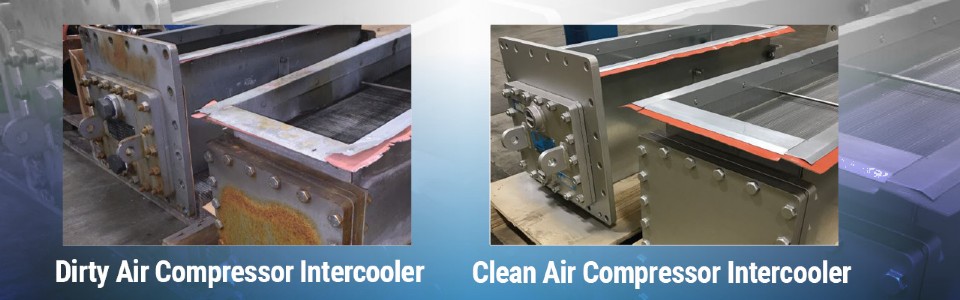
Keeping intercoolers clean is a vital component of scheduled preventative maintenance for your multi-stage compressor. Our intercooler bundles are easy to inspect and clean, as the entire shell is removable from the unit. Regular inspection of these components can reduce the amount of fouling in the compressor. Fouling, or the buildup of foreign materials within the intercooler, can cause corrosion and varnish of the compressor parts.
Operating with dirty intercoolers increases the risk of higher air temperatures and reduces air density during compression. This can result in reduced turndown and cause pressure to rise to surge—negatively affecting both efficiency and capacity.
FS-Elliott offers four different materials for intercooler tubing. Each material offers different levels of resiliency, heat transferability, and cost-effectiveness as shown in Table 1. Additionally, more important maintenance information is detailed on our Aftermarket Solutions – Intercooler Maintenance handout.
| Intercooler Tubing Material | Material Properties |
|---|---|
| Copper |
|
| Cu-Ni |
|
| Admiralty |
|
| Stainless Steel |
|
Why Intercooler Maintenance Matters
- Corrosion and varnish formation
- Higher air discharge temperatures
- Reduced air density
- Lower compressor efficiency
- Increased risk of surge events
- Reduced turndown and capacity
Dirty intercoolers can compromise compressed air quality and force the compressor to work harder, leading to higher energy costs and more frequent repairs.
Keep Your Compressor Running Efficiently with Proper Intercooler Maintenance
Connect with our team to explore how routine intercooler maintenance can help improve cooling efficiency, reduce energy consumption, prevent unplanned downtime, and support long-term compressor reliability.
YOU MAY ALSO LIKE
Continue Reading

How Compressed Air Impacts Product Quality and Efficiency in Automotive Manufacturing
Automotive manufacturing relies on compressed air at virtually every stage of production. From robotic assembly and paint operations to material handling and battery manufacturing, compressed air powers critical processes that keep production moving.
Polaris P650 DF Brochure
Maximize airflow and efficiency with FS-Elliott’s Polaris P650 DF (Double-Flow) centrifugal air compressor, delivering 10,000 to 20,000 CFM of ISO 8573-1 Class 0 oil-free air. Our brochure highlights its innovative dual-inlet design, compact footprint, advanced technologies, and performance features designed to support reliable, energy-efficient operation.

Polaris P750 Brochure
Experience high-capacity, energy-efficient performance with FS-Elliott’s Polaris P750 centrifugal air compressor, delivering up to 22,100 CFM of ISO 8573-1 Class 0 oil-free air. Our brochure highlights its compact design, advanced technologies, performance capabilities, and innovative features designed to support reliable operation and reduced lifecycle costs.

FS-Connect Brochure
Stay connected to your centrifugal compressors with FS-Elliott’s FS-Connect remote monitoring solution. Our data sheet highlights real-time monitoring, performance trending, notifications, and available subscription options designed to improve equipment visibility, support proactive maintenance, and minimize unplanned downtime.