










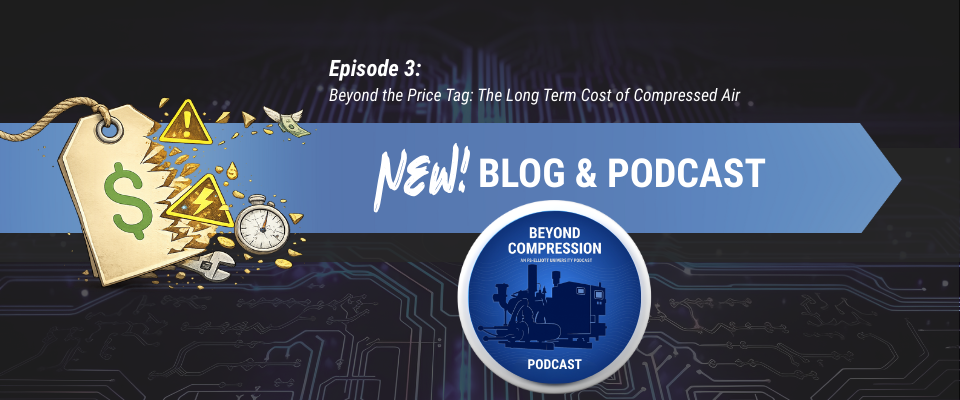
Más allá del precio: el coste a largo plazo del aire comprimido
18 de febrero de 2026
Why Compressed Air Costs More Than You Think
A general rule of thumb:
The Importance of System Audits
Key Drivers of Long-Term Cost
- Energy efficiency: Compressors are most efficient near full load. Partial-load operation increases energy use per unit of air.
- Motor performance: Motors operating outside their optimal range consume more energy and wear faster.
- Over-pressurization: Excess pressure increases energy use, leakage, and equipment stress.
- Maintenance strategy: Predictive, condition-based maintenance reduces downtime and unnecessary service.
- Consumables and air quality: Filters, lubricants, and separators affect pressure drop, energy use, and contamination risk.
- Condensate management: Improper handling of oil-contaminated condensate adds cost and environmental risk.
Technology’s Role in Cost Control
Bottom Line
Reduce the Long-Term Cost of Compressed Air
Connect with our team to explore how energy-efficient centrifugal compressors, advanced controls, and proactive maintenance strategies can help reduce operating costs and improve compressed air system reliability.
Frequently Asked Questions
Why is compressed air considered one of the most expensive utilities?
Because most of its cost comes from energy use over time, not the initial equipment purchase. Inefficiencies compound quickly.
How much does system pressure really matter?
A lot. Running even 10–20 psi above what’s required can increase energy consumption by 5–10% or more.
Are air system audits worth it?
Yes. Audits uncover inefficiencies that typically go unnoticed and provide a roadmap for targeted improvements.
What’s the advantage of oil-free compressed air?
Fewer consumables, lower contamination risk, reduced condensate treatment costs, and improved product protection in sensitive applications.
How does monitoring help reduce costs?
Real-time data helps identify abnormal operation, optimize loading, prevent failures, and reduce unnecessary energy use.
YOU MAY ALSO LIKE
Continue Reading

Cómo el aire comprimido afecta la calidad y la eficiencia de los productos en la fabricación de automóviles
La fabricación de automóviles depende de la presión de aire en prácticamente todas las etapas de la producción. Desde la ensambladura robótica y las operaciones de pintura hasta el manejo de materiales y la fabricación de baterías, la presión de aire impulsa procesos críticos que mantienen en marcha la producción.
Polaris P650 DF Brochure
Maximize airflow and efficiency with FS-Elliott’s Polaris P650 DF (Double-Flow) centrifugal air compressor, delivering 10,000 to 20,000 CFM of ISO 8573-1 Class 0 oil-free air. Our brochure highlights its innovative dual-inlet design, compact footprint, advanced technologies, and performance features designed to support reliable, energy-efficient operation.

Polaris P750 Brochure
Experience high-capacity, energy-efficient performance with FS-Elliott’s Polaris P750 centrifugal air compressor, delivering up to 22,100 CFM of ISO 8573-1 Class 0 oil-free air. Our brochure highlights its compact design, advanced technologies, performance capabilities, and innovative features designed to support reliable operation and reduced lifecycle costs.

FS-Connect Brochure
Stay connected to your centrifugal compressors with FS-Elliott’s FS-Connect remote monitoring solution. Our data sheet highlights real-time monitoring, performance trending, notifications, and available subscription options designed to improve equipment visibility, support proactive maintenance, and minimize unplanned downtime.