











Understanding Differential Pressure in Your Compressors
maio 6, 2025
What is Differential Pressure?
Differential pressure (DP) refers to the variance in air pressure between two defined points within a compressor system. Monitoring DP provides insight into system efficiency, component wear, and early indicators of potential signs that your compressor needs maintenance. Whether you’re working with rotary screws or centrifugal compressors, understanding where this pressure difference occurs and why helps prevent performance degradation and unplanned downtime.
Why Monitoring Pressure Drop Matters
Pressure drop describes the loss of air pressure in the compressor within a fluid-carrying network. Excess pressure drop often points to neglected maintenance or undersized system elements, and leads to:
- Increased energy consumption
- Reduced airflow and productivity
- Accelerated component wear
- Higher operating costs
How Differential Pressure Varies by Compressor Type
Oil-flooded rotary compressors
Oil-flooded rotary compressors are commonly used in general manufacturing and play a crucial role across industries ranging from automotive to light industrial. Typically operating within a differential pressure range of 9–16 psi and horsepower ratings from 5 to 350 HP, these compressors are well-suited for plants needing single or two-stage compression. Monitoring differential pressure is essential, as pressures exceeding 16 psi indicate that it’s time to schedule maintenance or repairs.
- Dirty or clogged filters
- Worn separators
- Restricted valves
- Insufficient cooling
Oil-Free Rotary Screw Compressors
- Increase interstage pressure
- Reduce flow
- Increased pressure drop over time
Centrifugal air compressors
- Minimal DP due to the absence of separators and coalescing filters
- Fewer mechanical contact points, reducing wear
- Multi-stage compression (up to four stages), enhancing energy efficiency
| Compressor Technology | Oil-Flooded Rotary | Oil-Free Rotary | Centrifugal |
|---|---|---|---|
| Inlet Air Filter | .5 psi | .5 psi | .5 psi |
| Inlet Valve | 1 psi | 1 psi | .5-1 psi |
| Cooler(s) | 1-3 psi | 1-3 psi | 1-2 psi |
| Separator(s) | 4-6 psi | N/A | N/A |
| Discharge Coalescing or Particulate Filter(s) | 2-5 psi | 2-5 psi | N/A |
| Discharge Check Valve | .5 psi | .5 psi | .5 psi |
| Total Pressure Drop | 9-16 psi | 5-10 psi | 2.5-3.5 psi |
Conclusion
Every psi of pressure drop in your air compressor system reflects directly on your energy costs, maintenance schedule, and equipment lifespan. By understanding differential pressure across various compressor types, plant operators can:
- Identify performance issues early
- Optimize system efficiency
- Select the right compressor based on operating needs
Optimize Compressor Performance with Proper Pressure Monitoring
Connect with our team to explore how monitoring differential pressure can help identify potential maintenance issues, improve operating efficiency, and support long-term centrifugal compressor reliability.
YOU MAY ALSO LIKE
Continue Reading

How Compressed Air Impacts Product Quality and Efficiency in Automotive Manufacturing
Automotive manufacturing relies on compressed air at virtually every stage of production. From robotic assembly and paint operations to material handling and battery manufacturing, compressed air powers critical processes that keep production moving.
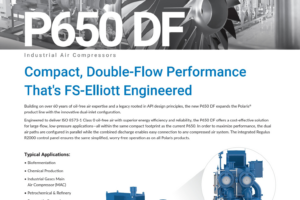
Polaris P650 DF Brochure
Maximize airflow and efficiency with FS-Elliott’s Polaris P650 DF (Double-Flow) centrifugal air compressor, delivering 10,000 to 20,000 CFM of ISO 8573-1 Class 0 oil-free air. Our brochure highlights its innovative dual-inlet design, compact footprint, advanced technologies, and performance features designed to support reliable, energy-efficient operation.

Polaris P750 Brochure
Experience high-capacity, energy-efficient performance with FS-Elliott’s Polaris P750 centrifugal air compressor, delivering up to 22,100 CFM of ISO 8573-1 Class 0 oil-free air. Our brochure highlights its compact design, advanced technologies, performance capabilities, and innovative features designed to support reliable operation and reduced lifecycle costs.

FS-Connect Brochure
Stay connected to your centrifugal compressors with FS-Elliott’s FS-Connect remote monitoring solution. Our data sheet highlights real-time monitoring, performance trending, notifications, and available subscription options designed to improve equipment visibility, support proactive maintenance, and minimize unplanned downtime.