









Pular para o conteúdo principal

FS-Elliott

FSE Logo

Rerate or Replace? How to Maximize Compressor Efficiency Without New Equipment

novembro 3, 2025
Rerate or Replace? How to Maximize Compressor Efficiency Without New Equipment

Rerating an existing compressor package provides a cost-efficient path to enhance plant air capacity without purchasing a new  centrifugal compressor package. This approach eliminates the complexities associated with minimum bid procurement, budget approval, and permits for acquiring a new compressor. Organizations can increase capacity and efficiency by rerating existing equipment while saving time and money. 

What is a Compressor Rerate?


A compressor rerate involves modifying internal components  and system settings of an existing compressor package to: 

  • Increase design flow and capacity. 
  • Raise the design discharge pressure. 
  • Improve compressor efficiency. 


When deciding between re-rating or purchasing a new air compressor, it is essential to asses your system’s current output, demand profile, and environmental conditions. While centrifugal compressors are engineered with 2-4 stages, impellers, diffusers, and inlet casings to meet specific conditions, their performance is confined to their original design limitations. Rerating can yield performance improvements of up to 30-50% by modifying internal components without replacing the entire skid assembly.  

Over time, ambient temperature increases, component wear, or changes in process requirements can reduce an older unit’s effective performance. Rerating can restore the flow to its original level and potentially enhance efficiency by leveraging advancements in aero hardware technology to accommodate current atmospheric conditions. 

Benefits of Rerating:


  • Even minor adjustments can significantly impact discharge pressure. Alongside airend components, upgrades to inlet and unloading valves, unloading silencers, or drivers may be necessary to accommodate the rerate effectively. 
  • Lead times for rerate projects is typically shorter than for the new equipment procurement. However, changes to accessories may require modifications to the customer site or utilities, which could result in additional downtime for the unit. 
  • Rerating is more cost-effective than purchasing an entirely new unit, especially if the airend already operates near the upper limits of the frame’s flow capabilities. 
  • The original airend can be retained as an emergency spare, helping ensure backup readiness. 
  • In certain cases, the rerate can be categorized as a maintenance expense rather than a capital budget expenditure.

Case Study #1: Major Automotive Manufacturer


A large automotive company in the Southern U.S. faced the challenge of meeting the increased air demand by adding new vehicle models to its production line. While considering the purchase of an additional air compressor, they were presented with the option of rerating to fulfill their air needs.

The existing air compressors’ airends provided 4,000 CFM each. Through rerating, the maximum capacity of each airend could be increased to 5,600 CFM, effectively meeting the plant’s increased production air supply requirements.

A thorough review of the compressors’ original design was conducted, and a comprehensive proposal was offered, demonstrating the increased inlet flow rate and capacity. The proposal outlined that the rerated airends would have the same design as the original air compressors and would utilize maintenance parts free of silicone. The proposal included full specifications and the proposed performance curve.

Rerate Proposal Summary Original Spec Proposed Rerate
Inlet Flow Rate 4000 CFM/airend 5600 CFM/airend
Discharge Pressure 150 PSIG 150 PSIG
Airend Power Requirements Per Airend 1015 HP 1207 HP
Currently Installed Driver Nameplate Horsepower 1250 HP No change required.
Capacity Increase (Per Airend) 1600 CFM/40%
Total Capacity Increase – 8000 CFM/40%

Case Study #2: Food & Beverage Manufacturer


A large food manufacturer in the Northeastern U.S. had concerns about the performance of their aging centrifugal compressor from the 1970s and the overall energy efficiency of their plant. They were searching for a solution that would allow them to reduce energy consumption while maintaining the necessary performance for production. 


With advancements in parts and aero technology, a rerate presented an opportunity to achieve the same level of performance as their existing air compressors while reducing horsepower usage. Specifically, the horsepower requirement decreased from 680 HP to 661.9 HP with the rerate while maintaining the same inlet capacity of 3,050 ICFM. 


To put this into perspective, if the compressor operates 24/7 throughout the year, this rerated unit would consume approximately 122,700 kWh less per year. Based on the average U.S. energy rate of 12.84 cents per kWh, this results in annual savings of roughly $15,700. 


This customer regained the full capacity of their aging compressor and achieved significant energy cost reduction while maintaining the required airflow for their operations. 

Making the Right Decision Between Rerate vs Replace


When considering ways to improve compressor efficiency, rerating stands out as an excellent option to increase flow, maintain or increase discharge pressure, and cut energy costs—without the capital cost and lead time of new equipment.

Each situation requires careful evaluation: existing frame capacity, duty cycle, efficiency goals, and cost of modifications must all be weighed. Consultation with engineers and authorized FS-Elliott representatives will help determine whether a rerate or new compressor acquisition is the best path forward.

Improve Compressor Efficiency with Rerate or Replacement Solutions

Connect with our team to explore whether rerating or replacing your centrifugal compressor can help improve energy efficiency, reduce operating costs, and optimize performance for your current compressed air demands.

YOU MAY ALSO LIKE

Continue Reading


Product Brochures
Barbara Myers

Polaris P650 DF Brochure

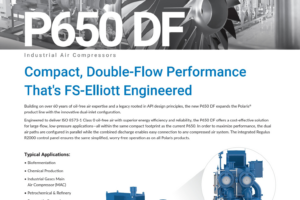
Maximize airflow and efficiency with FS-Elliott’s Polaris P650 DF (Double-Flow) centrifugal air compressor, delivering 10,000 to 20,000 CFM of ISO 8573-1 Class 0 oil-free air. Our brochure highlights its innovative dual-inlet design, compact footprint, advanced technologies, and performance features designed to support reliable, energy-efficient operation.

Read More »
Polaris P750 brochure featured image
Product Brochures
Barbara Myers

Polaris P750 Brochure

Experience high-capacity, energy-efficient performance with FS-Elliott’s Polaris P750 centrifugal air compressor, delivering up to 22,100 CFM of ISO 8573-1 Class 0 oil-free air. Our brochure highlights its compact design, advanced technologies, performance capabilities, and innovative features designed to support reliable operation and reduced lifecycle costs.

Read More »
FS-Connect brochure featured image
Product Brochures
Barbara Myers

FS-Connect Brochure

Stay connected to your centrifugal compressors with FS-Elliott’s FS-Connect remote monitoring solution. Our data sheet highlights real-time monitoring, performance trending, notifications, and available subscription options designed to improve equipment visibility, support proactive maintenance, and minimize unplanned downtime.

Read More »

Acessar

Monitoramento Remoto FS-Connect

Visualize os dados de operação do compressor e monitore o desempenho remotamente.

Portal FS-Elliott

Acesse recursos para parceiros de canal autorizados e membros da equipe interna.