API 614 and API 672 Air Compressor Standards Guide
Mei 29, 2025
Compressed air is often called the “4th utility” after electricity, water, and gas, making reliable air compression a critical part of any industrial process. The loss of compressed air can result in costly unplanned downtime, resulting in hundreds of thousands or even millions of dollars in lost production per day. This is particularly true in many Oil, Gas, Chemical, and Liquified Natural Gas (LNG) applications that rely on compressed air throughout the upstream and downstream processes.
To uphold the highest standards in design and operation of plants in aforementioned fields, the American Petroleum Institute (API) has established API standards for equipment in these types of applications, providing global industry standards to promote equipment safety, reliability, and efficiency.
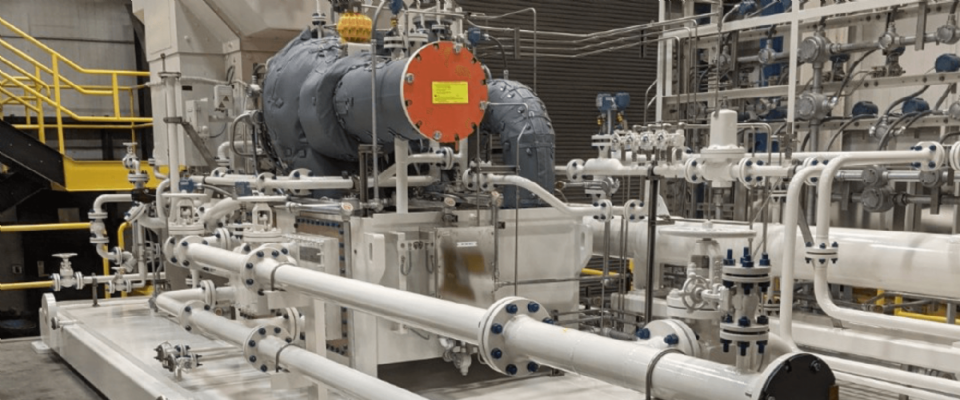
API 672 and API 614 are the two most applicable standards for air compressors, and each sets a benchmark for design, manufacturing, and testing. API 672 is the governing standard for integrally geared centrifugal air compressors, and API 614 is the governing standard of the compressor lubrication system.
What Is API 672?
What Is API 614?
While API 672 covers the centrifugal air compressor itself, API 614 focuses on the lubrication and seal oil systems used with rotating equipment, including compressors, turbines, and gears.
Why Are API 672 Air Compressors So Widely Used?
1. Reliability and Safety:
API 672 and 614 standards are designed to ensure the reliability and safety of air compressors. With a focus on robust engineering practices, these standards significantly reduce potential failures and enhance the plant operators’ overall safety. Compliance with these standards is crucial in industries where any compromise in reliability could lead to significant operational disruptions.
Certain requirements within these standards are designated as “if specified or Special Duty compressor requirements. These features and requirements are typically specified for installations requiring higher availability or un-spared.
2. Controls and Instrumentation:
API 672 and 614 define requirements for instrumentation and control of air compressors and lubrication systems. As control technology has evolved and advanced, OEM control systems can perform real-time compressor performance analysis to recommend alternative control modes and improve overall efficiency. This improved efficiency results in lower operational costs and reduces overall power consumption, leading to lower emissions.
Additional instrumentation monitoring coupled with the latest control technology allows for more predictive maintenance to reduce the likelihood of unplanned downtime for the equipment. API continues to incorporate additional standards to include more innovative solutions, and nowhere is this more apparent than within the advancement of compressor controls.
3. Inspection and Maintenance:
These API standards define best practices for manufacturers and operators for inspections and maintenance on air compressors. These criteria are developed by subject matter experts, including oil refineries, operators, contractors, and vendors. Compressors built to these API standards are designed with typical service and maintenance requirements in mind to reduce the difficulty and time required to perform routine maintenance and repair work.
4. Global Consistency:
API standards are internationally recognized, and API 672 is the global standard for centrifugal air compressors. Adhering to these standards ensures compliance with industry norms and regulations, allowing for consistency amongst manufacturers and operators internationally.
These global acceptance criteria fosters confidence among end-users in the reliability and quality of the equipment supplied by the compressor manufacturers. API-compliant machines have a proven track record of long-term reliable operation in the most demanding applications.
5. Environmental Considerations:
A focus on environmentally responsible practices has never been more important for contractors and operators than it is today. API standards play a pivotal role in reducing global emissions by defining the requirements followed by manufacturers and operators worldwide. By incorporating guidelines for energy efficiency, these standards help contribute towards net-zero goals.
API 672 and 614 standards serve as a cornerstone for designing, manufacturing, and operating centrifugal air compressors within the oil, gas, chemical, and LNG production and applications. By upholding these standards, industries ensure the longevity and safety of their equipment.

How API 672 and 614 Enable Global Consistency
How Do These Standards Support Environmental Goals?
- Lower energy usage per unit of compressed air
- Reduced emissions from inefficient equipment
- Cleaner lubrication systems with fewer environmental hazards
How to Choose the Right API 672 Centrifugal Compressor
- API Compliance: Make sure the compressor meets the latest API 672 requirements and that its lubrication system aligns with API 614. This helps ensure safe, long-lasting performance.
- Proven Expertise: Look for a manufacturer with a solid track record in API compressors—experience matters when reliability is on the line.
- Strong Support: Choose a supplier that offers reliable service, maintenance programs, and technical support to keep your equipment running smoothly.
- Flexibility: If you have unique site conditions or performance needs, work with a provider that can customize the compressor to fit your operation.
Why FS-Elliott’s API Compressors Stand Out
Meet Demanding Industry Standards with API-Compliant Compression Solutions
Connect with our team to explore how FS-Elliott’s PAP Plus engineered centrifugal compressors support API 672 and API 614 requirements, delivering reliable performance, operational safety, and long-term equipment reliability for demanding industrial applications.
YOU MAY ALSO LIKE
Continue Reading

How Compressed Air Impacts Product Quality and Efficiency in Automotive Manufacturing
Automotive manufacturing relies on compressed air at virtually every stage of production. From robotic assembly and paint operations to material handling and battery manufacturing, compressed air powers critical processes that keep production moving.

Polaris P650 DF Brochure
Maximize airflow and efficiency with FS-Elliott’s Polaris P650 DF (Double-Flow) centrifugal air compressor, delivering 10,000 to 20,000 CFM of ISO 8573-1 Class 0 oil-free air. Our brochure highlights its innovative dual-inlet design, compact footprint, advanced technologies, and performance features designed to support reliable, energy-efficient operation.

Polaris P750 Brochure
Experience high-capacity, energy-efficient performance with FS-Elliott’s Polaris P750 centrifugal air compressor, delivering up to 22,100 CFM of ISO 8573-1 Class 0 oil-free air. Our brochure highlights its compact design, advanced technologies, performance capabilities, and innovative features designed to support reliable operation and reduced lifecycle costs.

FS-Connect Brochure
Stay connected to your centrifugal compressors with FS-Elliott’s FS-Connect remote monitoring solution. Our data sheet highlights real-time monitoring, performance trending, notifications, and available subscription options designed to improve equipment visibility, support proactive maintenance, and minimize unplanned downtime.