










How Does a Centrifugal Compressor Work?
octubre 26, 2026
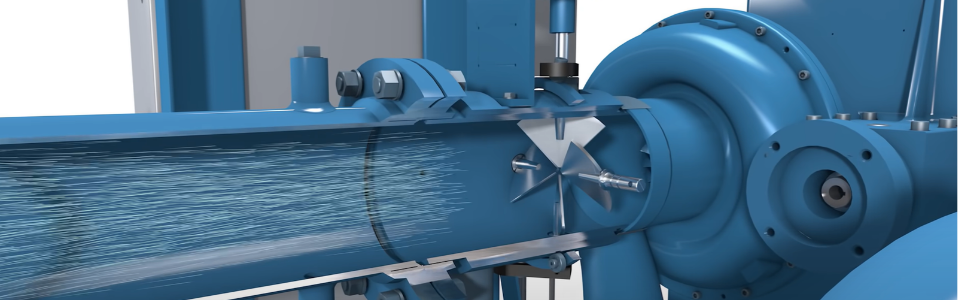
From powering manufacturing equipment to supporting critical process operations, compressed air plays an essential role across industry. For facilities that need large volumes of air and dependable pressure, centrifugal compressors provide an efficient solution designed for continuous operation.
A centrifugal compressor uses a high-speed rotating impeller to add energy to air or gas, increasing its velocity and pressure. A stationary diffuser then slows the flow, converting kinetic energy into additional pressure.
Unlike positive displacement compressors, which trap a volume of air and compress it by reducing the space it occupies, centrifugal compressors use a continuous flow process. This makes them well suited to high-demand applications in industries such as oil and gas, petrochemicals, power generation, and electronics manufacturing.
Understanding how this process works, and how the components work together, can help plant operators make informed decisions about compressor selection, operation, and maintenance.
See a Centrifugal Compressor in Action
Follow the air through each stage of an FS-Elliott centrifugal compressor, from the inlet through compression and cooling. The animation below illustrates how these components work together to deliver ISO 8573-1 Class 0 oil-free air for industrial applications.
The Operating Principle of a Centrifugal Compressor
Centrifugal compression involves three main steps: drawing air into the compressor, adding energy through a rotating impeller, and converting velocity into pressure.
- Air Enters the Compressor
Air enters through the inlet and flows toward the center, or eye, of the impeller. In compressors equipped with inlet guide vanes, these adjustable vanes help control the amount and direction of air entering the first compression stage. - The Impeller Adds Energy
The impeller rotates at high speed, moving air outward through its blade passages. As the impeller transfers mechanical energy to the air, both its velocity and pressure increase. This outward movement is commonly associated with centrifugal force. The rotating impeller supplies the energy needed for compression. - The Diffuser Converts Velocity into Pressure
Air leaving the impeller enters the diffuser, a stationary passage designed to reduce airflow velocity. As the air slows, more of its kinetic energy is converted into static pressure, a relationship often explained using Bernoulli’s principle. The compressed air is then collected and directed toward the next stage or the discharge outlet.
In a multistage compressor, this process repeats across several stages to achieve the required discharge pressure. Intercoolers remove heat between stages, helping reduce the energy required for subsequent compression. Together, these steps produce a continuous flow of compressed air to support large-scale industrial operations.
Key Components of a Centrifugal Compressor
Each component plays a specific role in managing airflow, building pressure, and maintaining efficient operation.
Impeller
The impeller is the rotating component that transfers energy to the air. Its blades accelerate air outward from the center, increasing velocity and pressure.
Depending on the compressor design, impeller speeds can exceed 50,000 revolutions per minute. High-strength materials and precisely engineered blade geometry help impellers withstand rotational forces while supporting efficient compression.
Diffuser
Located downstream of the impeller, the diffuser slows the airflow and converts velocity into additional static pressure. Its design directly influences the efficiency and performance of each compression stage.
Casing
The casing encloses and protects the internal components while containing pressurized air and guiding it through the compressor. It is designed to withstand the pressures and temperatures associated with operation and provide structural integrity.
Inlet Guide Vanes
Inlet guide vanes, or IGVs, regulate airflow entering the impeller. By adjusting the inlet flow, they help match compressor output to plant demand.
When full capacity is not required, adjustable IGVs can improve part-load efficiency and reduce power consumption within the compressor’s operating range.
Collector, Volute, or Scroll
The collector gathers air leaving the diffuser and directs it toward the discharge outlet or the next part of the compression system.
Depending on the design, a compressor may use a volute or scroll-shaped passage, collecting chambers, or interstage piping to manage this flow. In multistage systems, these passages direct air through cooling equipment and onward to subsequent stages.
Intercoolers & Aftercoolers
Compression generates heat. Coolers manage that heat to support efficient operation and prepare the air for downstream use.
Intercoolers remove heat between compression stages. Cooling increases air density and reduces the work required to compress the air in the next stage.
Aftercoolers reduce air temperature after the final compression stage, limiting the heat passed to downstream equipment.
Cooling also causes some water vapor to condense, allowing moisture separators and drains to remove liquid water. Additional drying and filtration may be needed to meet the application’s air quality requirements.
Advantages of Centrifugal Compressors
Compressed air is often called the “fourth utility,” alongside electricity, water, and natural gas. It supports applications ranging from pneumatic tools and automation to process control and material handling. Pneumatic equipment can also be useful in certain hazardous or sensitive environments where electrical ignition sources or hydraulic fluid leakage are concerns, provided the system is properly selected and designed for the application.
For facilities with substantial compressed air demand, centrifugal technology offers several advantages.
High Flow Capacity
Centrifugal compressors are designed to handle large volumes of air or gas. Their continuous flow makes them well suited to industrial facilities with sustained demand and multiple processes operating simultaneously.
Energy Efficiency & Reduced Maintenance Requirements
When properly sized and operated within their intended range, centrifugal compressors can provide efficient performance for continuous-duty applications.
Compared with reciprocating compressors, centrifugal designs generally have fewer moving compression components and do not rely on pistons, rings, or reciprocating valves. This can reduce wear-related maintenance requirements. Effective intercooling and capacity control further support energy-efficient operation.
ISO 8573-1 Class 0 Oil-Free Air
Oil-free compressed air helps protect products, processes, and equipment from oil contamination introduced during compression.
FS-Elliott centrifugal air compressors deliver ISO 8573-1 Class 0 oil-free air by keeping the compression air path separate from the lubrication system. Bearings and gears may still require lubrication, but that lubricant is isolated from the air being compressed.
Some centrifugal compressor designs use air or magnetic bearings, but these are not a requirement for oil-free compression. Class 0 certification addresses oil contamination; moisture, particles, and other air quality requirements must also be considered for the intended application.
Steady, Nonpulsating Airflow
Centrifugal compressors provide continuous, nonpulsating airflow. With appropriate sizing and controls, they support stable system pressure for applications such as chemical processing, manufacturing, and power generation.
Reliability & Serviceability
Designed for continuous industrial service, centrifugal compressors can support dependable operation over long service intervals when properly maintained.
Serviceable airend designs can also simplify maintenance and repair. FS-Elliott’s removable airend design provides access to major components and supports service or replacement strategies that help limit downtime. Actual maintenance requirements and repair times depend on the compressor design and operating conditions.
Industrial Applications of Centrifugal Compressors
Centrifugal compressors support a broad range of industries, supplying plant air, instrument air, process air, or compressed gases.
The required compressor configuration depends on the application. Industrial air compressors and engineered process gas compressors share the same basic operating principle, but their materials, seals, controls, and other design requirements can differ significantly.
Oil & Gas
Oil refining: Centrifugal compressors supply plant and instrument air, while engineered process gas compressors handle gases used in operations such as hydrocracking and catalytic reforming.
LNG production and transport: Centrifugal technology supports gas handling and liquefaction processes, with dedicated air systems also serving plant equipment and instrumentation.
Petrochemicals: Applications include plant air and process gas compression associated with large-scale chemical production, including ethylene and propylene.
Chemicals & Materials
Tratamiento químico: Compressed air and gas support instrumentation, material handling, chemical synthesis, and other production processes.
Air separation units: Centrifugal air compressors supply feed air for systems that separate atmospheric air into industrial gases such as oxygen and nitrogen.
Plásticos: Compressed air supports forming, shaping, pneumatic conveying, and equipment used in polymerization and extrusion operations.
Glass: Applications include forming, cooling, and air supply for equipment associated with high-temperature furnace operations.
Acero: Centrifugal compression supports pneumatic conveying and other plant processes, with appropriately designed systems also serving blast furnace air requirements.
Advanced Manufacturing
Electrónica: Oil-free compressed air supports semiconductor and circuit board manufacturing, where control of contamination is essential.
Electric vehicle and battery production: Applications include lithium-ion battery manufacturing, cathode and anode material processing, and automated production equipment.
Fabricación industrial: Compressed air powers pneumatic tools, automation systems, and assembly line equipment.
Power & Utilities
Power generation: Centrifugal air compressors supply plant and instrument air for control systems, valves, and auxiliary equipment.
Consumer Products & Healthcare
Food and beverage: Oil-free compressed air supports bottling, packaging, and food processing. Appropriate air treatment helps meet the quality and hygiene requirements of each application.
Medical and pharmaceutical: Compressed air supports medicine production, packaging, and other contamination-sensitive processes. Sterile air applications require suitable downstream treatment and validation.
Pulp and paper: Applications include drying-related processes, pneumatic material handling, and wastewater treatment, with equipment selected for the required flow and pressure.
Textiles: Compressed air supports weaving, dyeing equipment, and fabric finishing operations.
How to Improve Centrifugal Compressor Performance
Compressor performance depends on more than the equipment itself. Inlet conditions, operating demand, maintenance practices, and system controls all influence efficiency and reliability.
Monitor Inlet Conditions
Maintain inlet filtration and check for restrictions or contamination that could affect airflow. Clean inlet air helps limit fouling and protect internal components.
Changes in inlet temperature and pressure also affect compressor performance. Accounting for these conditions helps operators understand variations in capacity and power consumption.
Inspect Bearings & Seals
Follow the original equipment manufacturer’s (OEM) recommendations for inspecting and maintaining bearings, seals, and lubrication systems.
Monitoring indicators such as vibration, temperature, and lubricant condition can help identify developing issues before they lead to equipment damage or unplanned downtime.
Match Operation to Plant Demand
Operate the compressor within its specified capacity range and use available controls to align output with system requirements.
Proper sizing, inlet guide vane adjustment, and coordinated compressor operation can improve efficiency as demand changes. Reviewing plant demand over time can also reveal opportunities to reduce unnecessary energy use.
Take a Proactive Approach to Maintenance
Establish a maintenance program based on OEM guidelines and actual operating conditions. Combine scheduled inspections with performance trending, remote monitoring, and available energy advisory tools to identify changes early.
This approach helps operators plan service, evaluate potential energy savings, and maintain reliable performance throughout the compressor’s life.
Put Centrifugal Technology to Work in Your Facility
Selecting the right compressor starts with understanding your facility’s flow requirements, discharge pressure, air quality needs, and operating demands.
With more than 60 years of centrifugal compressor experience, FS-Elliott can help you evaluate these requirements and identify an oil-free compressed air solution that supports reliable performance and long-term efficiency.
Connect with our team to discuss your application and the right approach for your facility.
Frequently Asked Questions
What is the difference between a centrifugal compressor and a positive displacement compressor?
A centrifugal compressor uses a rotating impeller to add energy to air or gas, followed by a diffuser that converts velocity into pressure. A positive displacement compressor traps air and increases its pressure by reducing the volume it occupies. Centrifugal compressors are well suited to large, continuous airflow requirements, while the best technology for a specific application depends on flow, pressure, and demand patterns.
Are centrifugal compressors oil-free?
Centrifugal air compressors can provide oil-free air by keeping lubricants separate from the compression air path. FS-Elliott centrifugal air compressors deliver ISO 8573-1 Class 0 oil-free air. Bearings and gears still require lubrication, but the lubricant is isolated from the compressed air.
Why do centrifugal compressors use multiple stages?
Multiple compression stages allow a centrifugal compressor to increase pressure progressively. Each stage adds energy to the air, while intercoolers remove heat between stages. Cooling the air reduces the work required for the next stage, helping improve overall compression efficiency. The number of stages depends on the required pressure and compressor design.
Can a centrifugal compressor operate efficiently when air demand changes?
Yes, within its designed operating range. Inlet guide vanes and compressor controls help adjust output as demand changes. Part-load efficiency depends on compressor selection, inlet conditions, and how closely plant demand matches the compressor’s capacity range. Facilities with significant demand fluctuations should evaluate compressor sizing and system control strategies to avoid unnecessary energy use.
Does a centrifugal compressor need an air dryer?
An air dryer may be required depending on the application’s moisture limits and operating conditions. Intercoolers and aftercoolers remove heat and allow some water vapor to condense, but they do not remove all remaining moisture. Applications that require a controlled pressure dew point need suitable drying equipment.
How do you select the right centrifugal air compressor?
Start by evaluating required airflow, discharge pressure, air quality, and how demand changes throughout the day. Inlet conditions, cooling availability, installation space, maintenance access, and future capacity needs also affect selection. Comparing energy consumption and maintenance costs over the equipment’s expected life helps identify a solution that meets both operating and financial requirements.
RELATED ARTICLES
Información y recursos


Aerodinámica personalizada para compresores centrífugos
Un factor comúnmente pasado por alto en el rendimiento de los compresores es la influencia de las condiciones en el lugar y su impacto en el diseño, el funcionamiento diario y los costos de operación de los mismos. Estos factores pueden afectar directamente al consumo de energía, el funcionamiento diario y la eficiencia del sistema, métricas cruciales para los operadores de instalaciones.

Cómo especificar un compresor centrífugo para garantizar la fiabilidad y reducir los costos de ciclo de vida
Al especificar un compresor centrífugo, las decisiones tomadas durante la fase de ingeniería pueden influir mucho más que la selección del equipo. Las especificaciones del compresor afectan a la fiabilidad, la eficiencia, los costos del proyecto, los requisitos de instalación, la arquitectura de los controles, los plazos y el rendimiento operativo a largo plazo.

Steel Manufacturer Achieves $40K Annual Savings with Centrifugal Compressor Upgrade
In stainless steel production, uninterrupted uptime isn’t just a target; it’s critical. From powering automation and actuators to supporting cooling and descaling systems, compressed air plays a crucial role in ensuring every part of the mill operates at peak performance.