










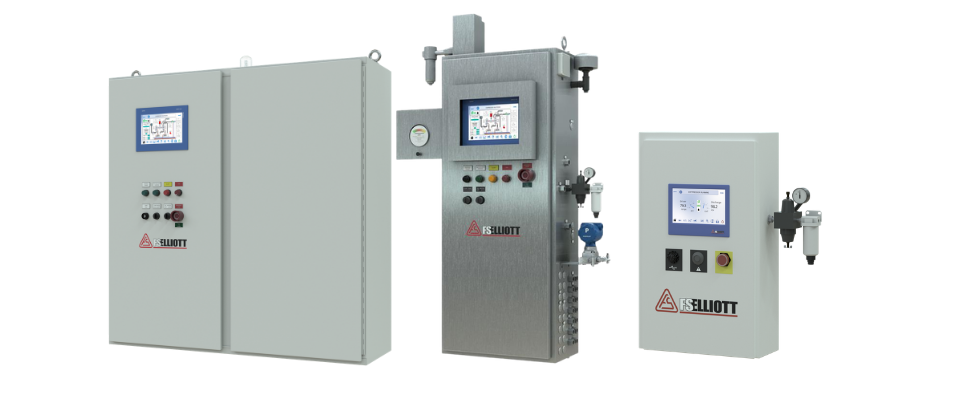
Compressor control system technology has evolved tremendously over the course of several decades. Let’s take a look at how these evolutions have related to the FS-Elliott control system product line:
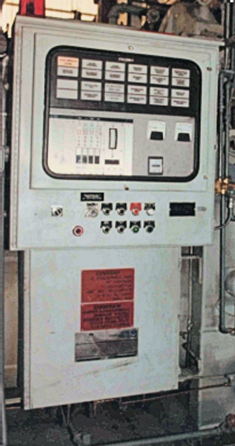 Electro-Pneumatic Control System (E/P) – These early systems used a split approach, electrical using push buttons, switches, lights, and relays for general operation, and pneumatic for pressure switches and regulators for compressor control. While reliable at the time, their limited functionality and aging hardware eventually led FS-Elliott to phase out support.
- DCCS Control Systems – Microprocessor-based VME control panel solutions that used delicate and difficult-to-handle hardware while providing limited user interface capabilities through a single-line display screen. FS-Elliott has discontinued supporting all DCCS control systems based on their age and availability of parts.
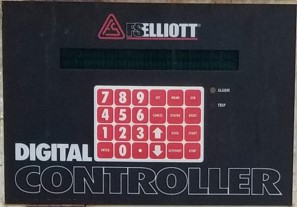 EDC Control Systems – Various versions of the EDC control system, including the EDC8, EDC16 & EDC32. All of these variations were microprocessor-style control systems that provided limited user interface capabilities through single or two-line display screens. FS-Elliott has discontinued supporting all EDC control systems based on their age and availability of parts.
- Regulus Control Systems – FS-Elliott’s Regulus Control System marked a major shift in compressor technology. Built on a programmable logic controller (PLC) foundation, these systems improved speed, interface design, and system integration. The Regulus line was introduced:
- Faster processing and greater memory
- Clear touchscreen HMIs for easier operation
- Compatibility with plant automation and IIoT tools
Earlier models like the R150 are no longer supported, and the R200 and R300 are in obsolescence. Today, FS-Elliott supports R1000, R2000, and R3000 systems that meet the needs of modern industrial users.
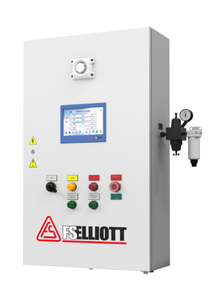 Today’s compressor control systems offer more than just on/off switches; they provide the intelligence and flexibility needed to maximize efficiency, uptime, and reliability.
- Easier User Experience Modern color touchscreen panels give operators real-time access to performance data, alerts, and control settings, all in one place.
- Smarter Control Modes Whether you’re running one compressor or coordinating several, modern systems support advanced modes like:
- Base Load
- Suction Throttle Control
- Pressure Band Optimization (PBO)
- Ambient Compensation Control (ACC)
- Integrated Compressor Control (ICC)
Each mode helps reduce waste and maintain stable system pressure.
- Scalable, Flexible Architecture Thanks to PLC platforms, Regulus panels can be upgraded or reconfigured as your plant’s needs evolve, ideal for retrofit projects.
- Built-in Data Logging System parameters and alarm logs can be downloaded directly to a USB in Excel format for trending, diagnostics, and reports.
- Energy Monitoring with Energy Advisor This FS-Elliott tool tracks compressor performance and flags opportunities for reducing energy usage, supporting long-term efficiency.
- Maintenance Planning Tools With the Maintenance Notification System, operators can track usage of consumables and plan service proactively, reducing unplanned downtime.
- Remote Access with FS-Connect FS-Connect brings remote monitoring to your control panel, allowing you to check performance, receive alerts, and pull reports from any web browser.
During system planning or optimization, engineers often use tools to model system performance scenarios and validate how different compressor configurations will respond to demand changes.


How Compressed Air Impacts Product Quality and Efficiency in Automotive Manufacturing
Automotive manufacturing relies on compressed air at virtually every stage of production. From robotic assembly and paint operations to material handling and battery manufacturing, compressed air powers critical processes that keep production moving.
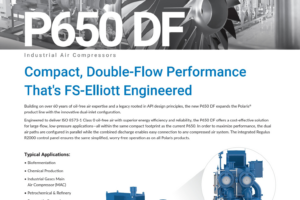

Polaris P650 DF Brochure
Maximize airflow and efficiency with FS-Elliott’s Polaris P650 DF (Double-Flow) centrifugal air compressor, delivering 10,000 to 20,000 CFM of ISO 8573-1 Class 0 oil-free air. Our brochure highlights its innovative dual-inlet design, compact footprint, advanced technologies, and performance features designed to support reliable, energy-efficient operation.

Polaris P750 Brochure
Experience high-capacity, energy-efficient performance with FS-Elliott’s Polaris P750 centrifugal air compressor, delivering up to 22,100 CFM of ISO 8573-1 Class 0 oil-free air. Our brochure highlights its compact design, advanced technologies, performance capabilities, and innovative features designed to support reliable operation and reduced lifecycle costs.
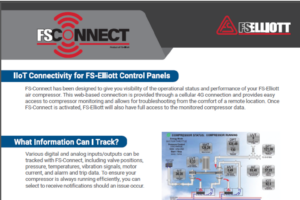
FS-Connect Brochure
Stay connected to your centrifugal compressors with FS-Elliott’s FS-Connect remote monitoring solution. Our data sheet highlights real-time monitoring, performance trending, notifications, and available subscription options designed to improve equipment visibility, support proactive maintenance, and minimize unplanned downtime.