






Using Integrated Compressor Control (ICC) to Operate a Multiple Compressor Installation
7月 25, 2023
What is Integrated Compressor Control?
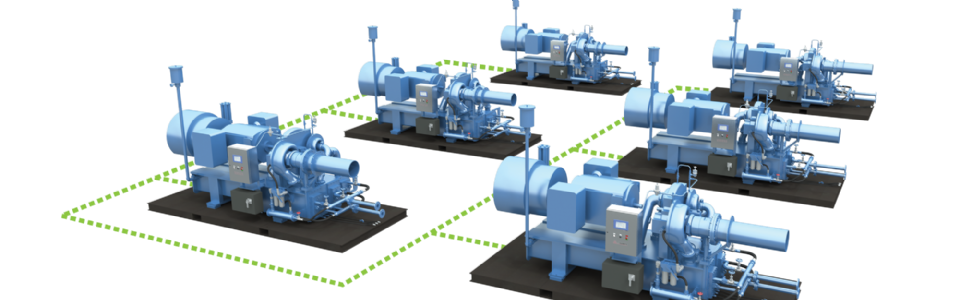
Integrated Compressor Control (ICC) is a feature that allows multiple compressors to maintain a constant system pressure that ensures maximum energy efficiency and minimal blow-off. Compressors are connected through an integrated Peer-to-Peer (P2P) network using the ICC feature. The P2P network, with the ICC sequencing software in each local control panel, allows users to select networked compressors as the master controller, thus creating redundancy and reducing cost by eliminating the need for a separate master controller.
How does it work and what benefits does it provide?
With the master controller assigned within the ICC network, all compressors’ starting, stopping, loading, and unloading are managed by a single control panel that helps the compressor maintain plant demand. To keep the overall plant demand, ICC will modulate the Inlet and Unloading Valves of all operating compressors, ensuring that each compressor performs at peak efficiency in conjunction with the entire group.
There are several benefits to utilizing ICC within a group of compressors. One main advantage is that ICC can eliminate unnecessary blow-off by throttling (closing) the Inlet(s) of all operating compressors until it achieves maximum system turndown. Once all operating compressors have reached maximum turndown, the ICC master can assign a single compressor to blow off and shut down. This control method eliminates unnecessary and uncontrolled blow-offs while ensuring that each compressor operates at peak efficiency.
How Optional Features and Functions of ICC Can Meet Everyone’s Needs.
Every system has its own requirements and compressor sequencing, meaning that there is not a one size fits all solution. FS-Elliott has developed features and functions within our ICC offering:
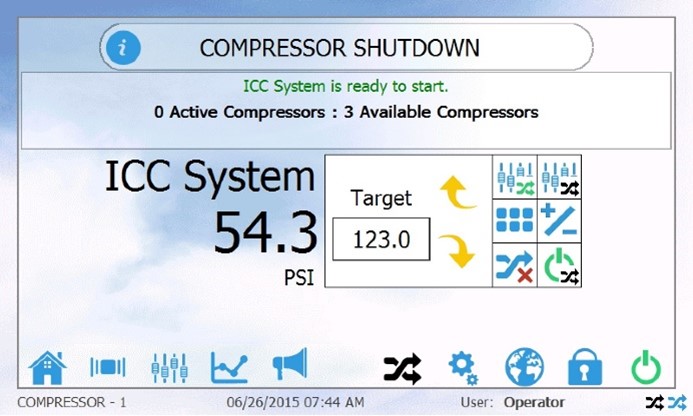
Compressor (P2P) Networking: Up to 6 compressors can be connected. Critical data from ALL compressors can be viewed on each compressor’s HMIs.
ICC Master Control Architecture: Master control logic resides in every compressor. Therefore any networked compressor in the system can be assigned as the dedicated master. Should the master controller fail, the next priority controller will take over.
Time Leveling Control: This feature automatically switches the start-stop order of the various compressors to achieve an equal run time on the ICC Control. The unit with the least run time hours will receive the highest start priority.
Lead/Lag Control: When multiple air compressors (2 or more) are in operation, Lead/Lag control ensures certain compressors are in the Lead (base load), whereas other compressors act in a trim function (throttled).
Load Sharing: During load sharing control, the master controller ensures that all compressors’ Inlet(s) are throttled to the same percentage and that any required blow-off is achieved through a single trim compressor. Each air compressor unit proportionately shares the load of the plant air system to increase efficiency further.
Optimize Multiple Compressor Operations with Integrated Control
Connect with our team to explore how FS-Elliott’s Integrated Compressor Control (ICC) solutions can help coordinate multiple compressors, optimize energy efficiency, maintain consistent system pressure, and reduce operating costs.
YOU MAY ALSO LIKE
Continue Reading

How Compressed Air Impacts Product Quality and Efficiency in Automotive Manufacturing
Automotive manufacturing relies on compressed air at virtually every stage of production. From robotic assembly and paint operations to material handling and battery manufacturing, compressed air powers critical processes that keep production moving.

Lifecycle Optimization for Centrifugal Air Compressors — Episode 5: Why Driver Train Health Matters as Much as the Compressor Itself
In Episode 5, explore why motors, gearboxes, couplings, and auxiliary systems deserve close attention, and how the health of the driver train influences compressor reliability.

Lifecycle Optimization for Centrifugal Air Compressors — Episode 4: Advances in Instrumentation & Monitoring
In Episode 4, explore how advances in compressor monitoring, AI, and engineering support condition-based maintenance and modernize aging equipment.

Lifecycle Optimization for Centrifugal Air Compressors — Episode 3: What Gets Missed in Troubleshooting
In Episode 3, learn how overlooked filtration, cooling, and lubrication issues can escalate into compressor failures, and why effective troubleshooting starts with root causes.