






Modernizing Your Compressor Controls: A Practical Guide to Improving Reliability and Efficiency
Desember 2, 2025
As facilities continue modernizing their operations, compressor control systems have become one of the most effective areas to improve reliability, energy efficiency, and day-to-day visibility. What began decades ago as simple protection logic has evolved into a plant-wide intelligence platform that helps operators run cleaner, safer, and more efficiently.
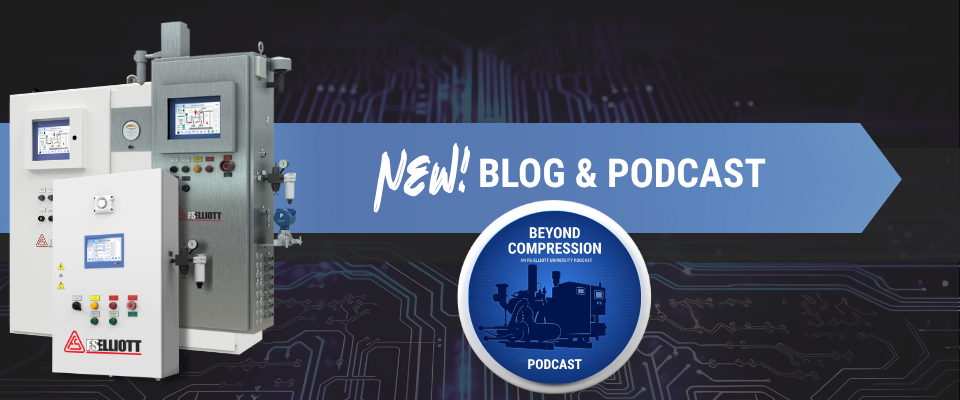
This blog highlights how compressor controls have evolved, why modernization matters, and what today’s systems can offer, while our latest Beyond Compression podcast episode takes a deeper dive into the full discussion.
Prefer to listen instead? Tune into our podcast to learn more about the benefits of modernizing compressor controls.
How Compressor Control Systems Have Evolved
Before the 1960s, compressor controls focused primarily on basic protections such as overspeed and surge. As manufacturing needs increased, relay-based systems introduced simple sequencing and monitoring throughout the 1960s and 1970s.
The most significant transformation occurred in the 1980s through the early 2000s with the introduction of microprocessors and PLC-based platforms. Operators gained clearer interfaces, improved feedback, and the ability to connect compressors into broader plant networks.
Today’s control systems build on that foundation with faster processors, improved diagnostics, and predictive capabilities that help operators address issues before they escalate, improving both stability and efficiency.
Why Upgrading Matters
Upgrading compressor controls is often one of the most cost-effective ways to enhance compressed air performance. Modern panels provide improved reliability, expanded protection logic, and better visibility through intuitive touchscreens and advanced monitoring features. Seamless integration with plant networks enables more cohesive operation, while optimized control modes help lower energy usage and reduce venting.
If your current system relies on outdated HMI hardware, is restricted to base mode, or cannot communicate with plant systems, modernization may offer significant gains in uptime and efficiency.
FS-Elliott Control Panel Solutions
FS-Elliott offers three Regulus control panels designed to support a wide range of operational needs:
- Regulus R1000 is a modern, cost-effective entry point featuring a 9-inch touchscreen interface, data logging, and essential communication capabilities.
- Regulus R2000 uses a PLC-based architecture to deliver more flexibility and expanded monitoring for advanced applications.
- Regulus R3000 is a fully engineered PLC platform for complex systems and can be delivered in simplex or redundant configurations depending on operational requirements.
All three Regulus panels include the following features designed to support long-term performance:
- Energy Advisor tracks compressor efficiency and provides tailored recommendations to help operators make data-driven adjustments, improving performance and reducing energy consumption.
- Maintenance Notification System monitors compressor usage and provides proactive reminders when predictive maintenance is required, helping minimize unexpected downtime and maintain steady operation.
- FS-Connect Remote Monitoring: A secure, cellular-based platform offering real-time system visibility without requiring access through the plant firewall.
Enhancing Your Control System
A range of standard and optional modes are available to further expand the capability of Regulus control panels, including:
- Integrated Compressor Control (ICC): Provides plant-wide sequencing, load balancing, and run-hour management.
- Suction Throttle and Auto-Dual Modes: Traditional control modes that support stable pressure control based on system demand.
- Pressure Band Optimization (PBO): Adjusts logic to maintain the lowest pressure necessary to meet demand, reducing unnecessary energy use.
- Ambient Compensation Control (ACC): Automatically adjusts operation according to seasonal and environmental temperature changes to maintain stability and reduce venting.
Upgrading Your Existing Control System
Modernizing your control system is a straightforward process. Our pre-engineered retrofit kits include all the required hardware, cabling, and configured components, designed for efficient installation across the R1000, R2000, and R3000 platforms. Installations for the R1000 and R2000 are typically completed in under a week, while timelines for the R3000 vary depending on system complexity.
These retrofit packages ensure a controlled, low-disruption transition to advanced control functionality.
Modernize Your Compressor Controls for Better Performance
Connect with our team to explore how upgrading your compressor control system can help improve energy efficiency, enhance monitoring capabilities, reduce unplanned downtime, and extend equipment reliability.
YOU MAY ALSO LIKE
Continue Reading

How Compressed Air Impacts Product Quality and Efficiency in Automotive Manufacturing
Automotive manufacturing relies on compressed air at virtually every stage of production. From robotic assembly and paint operations to material handling and battery manufacturing, compressed air powers critical processes that keep production moving.
Ethylene Plant Saves Over $100K Annually Through Compressed Air System Upgrades
A major ethylene production facility increased compressed air capacity and improved operational reliability through strategic system upgrades, achieving over $100,000 in annual energy and maintenance savings while meeting API 672 requirements.
Cast Iron Foundry Saves Over $55K While Increasing Compressed Air Capacity
A cast iron foundry increased compressed air capacity by 4,500 CFM while reducing energy consumption and maintenance costs through centrifugal compression, achieving over $55,000 in savings and improving operational efficiency.
How a paperboard manufacturer saved over $135K/year by employing a centrifugal compressor.
A paperboard manufacturer reduced operating costs and improved efficiency by transitioning from rotary screw compressors to centrifugal compression, achieving over $135,000 in annual energy and maintenance savings while introducing oil-free compressed air to its processes.