











Optimizing Manufacturing Operations: Managing Cost Fluctuations & Proven Strategies for Success
Februari 2, 2026
Manufacturers continue to operate in an environment where cost volatility is difficult to avoid. Raw material pricing, labor availability, transportation costs, and broader economic conditions can all shift quickly, placing pressure on margins and long-term planning.
While many of these factors sit outside direct control, manufacturing facilities can still take targeted action to stabilize operating costs. This article outlines where cost fluctuations originate and how operational decisions, especially around compressed air systems, can reduce exposure and improve efficiency.
Understanding Where Manufacturing Costs Shift
Manufacturing costs typically fall into four main categories:
- Raw materials
- Labor
- Overhead and utilities
- Indirect operational expenses
These inputs vary by industry and production method, but the challenge remains consistent: cost variability introduces risk into production planning and profitability.
To manage this effectively, facilities need visibility into both fixed and variable cost drivers, along with a strategy to reduce sensitivity to change.
What Drives Manufacturing Cost Fluctuations?
Several factors consistently impact manufacturing cost structures:
Raw Material Volatility
Commodity pricing, supply chain disruptions, and geopolitical conditions can shift input costs with little warning. This is often the most visible cost driver.
Labor Cost Pressure
Changes in wage requirements, workforce availability, and benefits structures can steadily increase operating costs over time.
Transportation and Logistics
Fuel pricing, shipping delays, and regulatory changes affect both inbound materials and outbound products.
Macroeconomic Conditions
Inflation, interest rates, and demand cycles influence both cost inputs and production output, often at the same time.
How Cost Fluctuations Impact Facility Performance
- Reduced margins
- Limited flexibility in pricing
- Delayed capital investments
- Increased pressure on maintenance and operations teams
On the other hand, facilities that actively manage operational efficiency can offset external cost increases and maintain stability.
Strategies to Reduce Exposure to Cost Variability
While external costs cannot be controlled, internal efficiency can.
Risk Planning and Forecasting
Facilities that model cost scenarios and plan for variability respond faster to changes and avoid reactive decision-making.
Supplier Strategy
Long-term agreements, diversified sourcing, and volume-based negotiations can reduce exposure to pricing swings.
Lean Manufacturing Practices
Process optimization, waste reduction, and continuous improvement help maintain cost discipline regardless of external conditions.
Why Compressed Air Systems Are a High-Impact Cost Lever
Compressed air is often considered the fourth utility in industrial operations. It is also one of the most energy-intensive systems in a facility.
Because of this, even small efficiency improvements can lead to measurable cost savings.
Addressing air compressor performance is often one of the most direct ways to reduce operating costs without disrupting production.
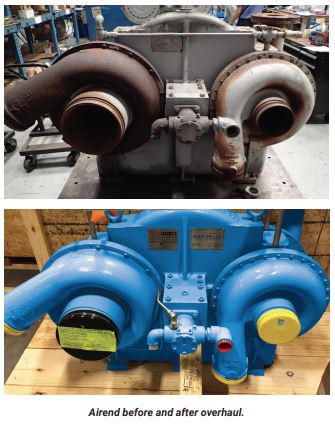
Using Airend Overhauls to Restore Efficiency
Over time, compressor airends experience wear that reduces efficiency and increases energy consumption.
An airend overhaul restores the compressor to its original operating condition, resulting in:
- Improved performance and flow consistency
- Reduced vibration and mechanical stress
- Lower energy consumption
- Extended equipment lifespan
Restoring internal tolerances allows the compressor to operate closer to its design efficiency, which directly reduces operating costs.
Scheduled overhauls also prevent larger mechanical failures, avoiding more expensive repairs and unplanned downtime.
Rerates: Adjusting Performance to Match Current Demand
An airend rerate modifies internal components such as impellers and diffusers to better match current conditions.
This can result in:
- Increased capacity (often 30–50%)
- Improved energy efficiency
- Better alignment with actual demand
- Reduced operating costs
Instead of replacing the entire system, a rerate allows facilities to adapt existing equipment to new requirements.
When a Derate Makes More Sense
Not all systems need more capacity. In some cases, compressors are oversized for their application and operate inefficiently as a result.
Oversized compressors often:
- Consume more energy than required
- Operate in blow-off conditions
- Increase overall utility costs
An airend derate reduces capacity and discharge pressure to better align with system demand, improving efficiency and lowering energy use.
Aligning Equipment Strategy with Cost Control
Managing cost fluctuations is not only about reacting to external changes, it requires internal alignment between equipment performance and operational demand.
Compressed air systems represent a consistent and controllable opportunity to improve efficiency, reduce waste, and stabilize operating costs.
By evaluating overhaul, rerate, or derate options, facilities can make targeted improvements that deliver measurable financial impact.
Improve Your Compressed Air System Efficiency
Connect with our team to explore how compressor performance evaluations, airend overhauls, and rerates can help improve energy efficiency, reduce operating costs, and support long-term equipment reliability.
YOU MAY ALSO LIKE
Continue Reading

How Compressed Air Impacts Product Quality and Efficiency in Automotive Manufacturing
Automotive manufacturing relies on compressed air at virtually every stage of production. From robotic assembly and paint operations to material handling and battery manufacturing, compressed air powers critical processes that keep production moving.
Polaris P650 DF Brochure
Maximize airflow and efficiency with FS-Elliott’s Polaris P650 DF (Double-Flow) centrifugal air compressor, delivering 10,000 to 20,000 CFM of ISO 8573-1 Class 0 oil-free air. Our brochure highlights its innovative dual-inlet design, compact footprint, advanced technologies, and performance features designed to support reliable, energy-efficient operation.

Polaris P750 Brochure
Experience high-capacity, energy-efficient performance with FS-Elliott’s Polaris P750 centrifugal air compressor, delivering up to 22,100 CFM of ISO 8573-1 Class 0 oil-free air. Our brochure highlights its compact design, advanced technologies, performance capabilities, and innovative features designed to support reliable operation and reduced lifecycle costs.

FS-Connect Brochure
Stay connected to your centrifugal compressors with FS-Elliott’s FS-Connect remote monitoring solution. Our data sheet highlights real-time monitoring, performance trending, notifications, and available subscription options designed to improve equipment visibility, support proactive maintenance, and minimize unplanned downtime.