











Seasonal Maintenance Checklist for Centrifugal & Rotary Screw Air Compressors
August 28, 2026
A combined perspective from the compressed air experts at FS-Elliott and FS-Curtis. Seasonal temperature changes don’t just affect the weather; they directly impact compressed air system performance, efficiency, and reliability. Regardless of your compressor technology, shifts in temperature and humidity introduce new challenges that can quietly reduce efficiency, strain components, and lead to unplanned downtime.
The good news is that these challenges are predictable and preventable with the right preparation. Following a structured, OEM-recommended maintenance schedule is one of the most effective ways to maintain optimal performance year-round. These guidelines are developed by engineering, service, and product experts with deep knowledge of how compressors run in real-world conditions. They are designed to help reduce risk, extend equipment life, and avoid costly downtime.
Depending on your location, you may be preparing for peak summer heat or transitioning into colder winter conditions, but in either case, seasonal changes introduce predictable challenges that require attention.
Prefer to listen instead? This topic is also explored in our podcast, where we discuss how seasonal conditions impact compressor performance and what proactive maintenance looks like in real-world operations.
How Seasonal Changes Impact Compressed Air Systems
Ambient conditions play a critical role in compressor performance. As temperature and humidity shift, so do air density, cooling efficiency, and overall system stability.
For centrifugal compressors, inlet air conditions are especially important. Higher temperatures reduce air density, which decreases mass flow and overall efficiency. At the same time, increased humidity and cooling limitations can further compound performance losses.
Rotary screw compressors are affected differently but just as significantly. These systems rely heavily on lubrication and cooling, making them more sensitive to temperature swings that influence oil performance and heat rejection.
Across both technologies, four factors consistently influence performance: cooling effectiveness, lubrication behavior, air filtration, and moisture management.
- Cooling effectiveness is critical, as seasonal temperature swings directly impact a system’s ability to reject heat and maintain stable operating conditions.
- Lubrication plays a critical role in both compressor types, but its function and impact vary significantly, and it becomes even more important as operating conditions shift with the seasons.
- Air filtration is another essential factor. Seasonal pollen, dust, debris, and airborne contaminants can restrict inlet airflow, reduce efficiency, and increase component wear if not properly maintained.
- Moisture management is equally important. Changes in humidity can increase condensate levels, leading to corrosion, reduced efficiency, or freezing risks in colder conditions.
When these conditions are not properly managed, reliability, performance, and long-term equipment health can decline.
The Role of Lubricant in Compressor Performance
Lubrication plays a critical, but often underestimated, role in compressed air system performance, and its importance varies by compressor technology. While centrifugal compressors delivering ISO 8573-1 Class 0 oil-free air do not introduce oil into the compressed air stream, lubrication is still critical within the machine itself. Bearings and gearboxes rely on properly conditioned lubricant to maintain reliability. Temperature swings can affect oil viscosity, moisture contamination risk, and overall lubricant performance within these internal systems.
In rotary screw compressors, lubrication is more central to the compression process itself, especially in oil-flooded designs where lubricant is used for cooling, sealing, and protection. Even in oil-free rotary systems, lubrication remains critical for bearings and timing gears.
Seasonal temperature changes significantly impact lubricant behavior. Elevated temperatures accelerate oil degradation and increase the risk of varnish formation, while lower temperatures increase viscosity, reducing flow and lubrication effectiveness. Moisture contamination is also a concern, particularly during seasonal transitions when condensation levels change.
Maintaining proper oil temperature is critical:
- Ideal centrifugal operating range: 125–135°F
- Above ~135°F: increased risk of varnish formation and oil degradation
- Below ~125°F: increased risk of moisture contamination, reduced lubricity, and potential bearing damage
Routine oil analysis provides early insight into contamination, varnish formation, and moisture presence, allowing operators to address issues before they impact performance or reliability.
Because of this, lubrication should be actively managed, not treated as a static maintenance item. When properly maintained, it supports efficiency, reduces wear, and helps prevent unexpected failures across the system.
Summer Compressor Maintenance: Heat, Humidity, and System Stress
Humidity further increases moisture load across the system, compounding these effects. What begins as a small efficiency loss can quickly escalate into overheating, excessive oil carryover, or downstream equipment issues.
Seasonal dust and debris can also load inlet filters faster, restricting airflow and reducing efficiency.
- Inspecting and cleaning heat exchangers
- Ensuring proper airflow and filtration
- Replacing inlet air filter elements per OEM guidelines
- Monitoring lubricant condition and operating temperature
Winter Compressor Maintenance: Cold Starts, Moisture, and Freezing Risks
- Frozen condensate drain lines
- Moisture carryover into downstream systems
- Unstable operating conditions during startup
Best Practices for Year-Round Compressor Reliability
Seasonal preparation does not require reinventing your maintenance strategy, but it does require focusing on the right areas.
Maintaining system performance involves ensuring cooling systems remain effective, lubrication systems operate within proper ranges, and airflow and moisture management systems function as intended.
- Heat exchangers and cooling components should be inspected and cleaned regularly to maintain proper heat transfer
- Lubrication systems should be monitored to ensure proper viscosity, cleanliness, and temperature control
- Inlet and airflow systems should remain clean and unrestricted
- Condensate drains should be tested regularly, recommended every 2,000 hours or quarterly
- Cooling systems should be verified for proper operation in summer and protected against freezing in winter
- Lubricant testing should be performed routinely to monitor oil condition, detect contamination or varnish early, and support long-term compressor health
- Air filter elements should be inspected more frequently during dusty, pollen-heavy, or debris-prone seasons and changed per OEM recommendations.
Why Seasonal Maintenance Matters
Ready to Improve Compressed Air System Performance?
Frequently Asked Questions
Why is summer such a critical time for compressor performance?
Both centrifugal and rotary compressors are impacted by heat. Centrifugal units see reduced air density and cooling efficiency, while rotary compressors experience higherinternal temperatures that affect lubrication and cooling systems.
How does lubrication differ between centrifugal and rotary compressors?
Centrifugal compressors delivering ISO 8573-1 Class 0 oil-free air use lubrication for bearings and gearboxes only, keeping oil out of the air stream. Rotary screw compressors, especially oil-flooded designs, use lubricant as part of the compression process for cooling, sealing, and protection. In both cases, temperature changes impact lubricant performance.
What are the most overlooked maintenance items?
Coolers and condensate drains. Dirty coolers reduce efficiency and can lead to surge in centrifugal compressors, while in rotary systems they contribute to overheating. Failed drains can lead to moisture buildup in summer and freezing issues in winter. Dirty air filter elements can quickly reduce inlet airflow, increase pressure drop, and can quietly lower compressor efficiency.
What are the biggest winter risks across both technologies?
Moisture and freezing. Centrifugal systems must manage condensate and avoid frozen drains, while rotary systems also face thickened oil, difficult startups, and potential freezing in piping and dryers.
Can seasonal prep actually prevent downtime?
In most cases, yes. Seasonal issues are predictable. Following OEM guidelines and performing routine maintenance significantly reduces the likelihood of performance loss, equipment damage, and unexpected shutdowns.
YOU MAY ALSO LIKE
Continue Reading

How Compressed Air Impacts Product Quality and Efficiency in Automotive Manufacturing
Automotive manufacturing relies on compressed air at virtually every stage of production. From robotic assembly and paint operations to material handling and battery manufacturing, compressed air powers critical processes that keep production moving.
Polaris P650 DF Brochure
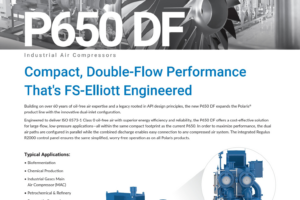
Maximize airflow and efficiency with FS-Elliott’s Polaris P650 DF (Double-Flow) centrifugal air compressor, delivering 10,000 to 20,000 CFM of ISO 8573-1 Class 0 oil-free air. Our brochure highlights its innovative dual-inlet design, compact footprint, advanced technologies, and performance features designed to support reliable, energy-efficient operation.

Polaris P750 Brochure
Experience high-capacity, energy-efficient performance with FS-Elliott’s Polaris P750 centrifugal air compressor, delivering up to 22,100 CFM of ISO 8573-1 Class 0 oil-free air. Our brochure highlights its compact design, advanced technologies, performance capabilities, and innovative features designed to support reliable operation and reduced lifecycle costs.

FS-Connect Brochure
Stay connected to your centrifugal compressors with FS-Elliott’s FS-Connect remote monitoring solution. Our data sheet highlights real-time monitoring, performance trending, notifications, and available subscription options designed to improve equipment visibility, support proactive maintenance, and minimize unplanned downtime.